Choosing China’s top Portable Toilets supplier requires more than comparing catalog prices. Buyers must examine hygiene, durability, delivery reliability, and after-sales support. The WHO and UNICEF Joint Monitoring Programme reported that 3.5 billion people lacked safely managed sanitation in 2022. That figure shows why dependable temporary sanitation matters at construction sites, festivals, disaster-response areas, and remote projects.
Real-world performance begins with design details. Inspect the polyethylene wall thickness, door hinges, ventilation openings, non-slip floor, waste tank capacity, and handwashing options. A crowded event may expose weak ventilation within hours. A thin floor can become a costly failure under repeated commercial use. EN 16194:2012 provides useful guidance for mobile, non-sewer-connected toilet cubicles. It addresses basic product and service considerations, although local requirements still need checking.
Worksite planning also deserves careful attention. In the United States, OSHA’s sanitation rule specifies one toilet for 20 or fewer employees, with additional facilities for larger teams. Other jurisdictions may apply different ratios. Therefore, a responsible supplier should request your user count, rental duration, climate, transport route, and servicing plan before recommending a model.
Supplier evaluation should include factory audits, production photos, material specifications, inspection records, and independent customer references. ISO 9001 certification can indicate a documented quality system, but it does not guarantee every shipment will be perfect. No supplier looks flawless on a spreadsheet. Ask how the company handles cracked panels, missing parts, delayed containers, and warranty claims. A small trial order may reveal more than polished sales language. The strongest China supplier combines practical experience, transparent communication, stable manufacturing, and evidence that its Portable Toilets perform beyond the showroom.
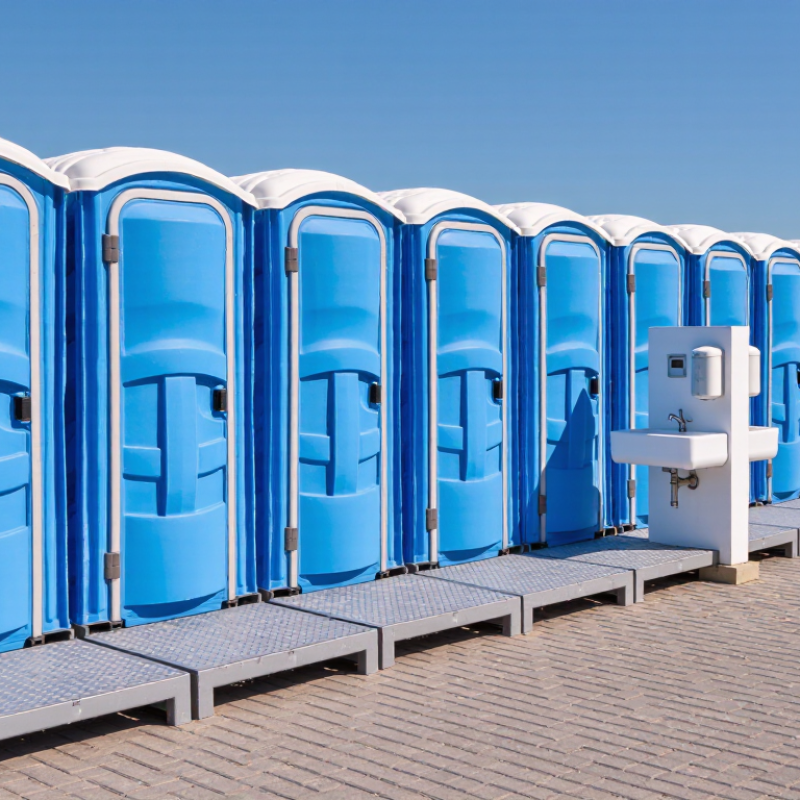
China Top Portable Toilets Supplier: How to Choose?
A reliable portable toilet supplier is more than a low-price factory. The WHO/UNICEF Joint Monitoring Programme reported in 2023 that 3.5 billion people lacked safely managed sanitation in 2022. This figure shows why dependable sanitation equipment matters at construction sites, festivals, and emergency locations.
A serious Chinese supplier should provide traceable material specifications, production photos, inspection records, and clear replacement-part support. Check the cabin wall thickness, floor strength, door hardware, tank capacity, ventilation, and odor-control design. Ask for test results based on relevant standards, including ISO 24513 principles for sanitation services and applicable regional product requirements. Do not trust polished catalogs alone.
Factory experience matters. Request a video inspection or independent audit before payment. Confirm whether the supplier can control color consistency, molding accuracy, packaging, and delivery damage. A small sample order can reveal more than a long sales presentation. Look closely at the hinge movement, floor drainage, and seat stability.
Perfect suppliers do not exist. I would still question any supplier promising zero defects or unlimited customization without added time. A dependable partner admits production limits, documents corrective actions, and answers technical questions with measurements. Service after delivery is equally important, especially when damaged parts arrive or cleaning schedules change. Reliability is visible in records, not slogans.
| Evaluation Dimension | What a Reliable Supplier Should Demonstrate | Practical Buyer Benchmark | Documents or Checks to Request |
|---|---|---|---|
| Product Construction | A stable cabin, correctly fitted panels, secure door hardware, a sealed waste tank, and a floor designed for regular cleaning. | No visible gaps, sharp edges, deformation, leakage, or door misalignment during sample inspection. | Detailed drawings, material specifications, assembly instructions, sample inspection photographs, and a physical pre-shipment inspection. |
| Material Transparency | The supplier identifies the main materials used in the cabin, tank, floor, fittings, and electrical parts instead of using only general terms such as “premium material.” | Material names, thicknesses, colors, and surface treatments are stated consistently in the quotation, drawings, and inspection report. | Bill of materials, technical data sheets, material declarations, and a confirmation that the delivered product matches the approved sample. |
| Waste-Tank Performance | The tank design supports safe containment, cleaning, servicing, and transport, with connections that minimize leakage risk. | Tank capacity, usable capacity, access points, drainage method, and cleaning procedure are stated in measurable terms. | Tank drawings, leak-test records, capacity data, maintenance instructions, and photographs of internal access points. |
| Hygiene and Odor Control | The design supports hand hygiene, ventilation, regular waste removal, and the correct use of approved sanitation chemicals. | The supplier provides a written cleaning frequency, chemical compatibility guidance, ventilation details, and a waste-servicing procedure. | Cleaning and disinfection schedule, chemical compatibility statement, ventilation specification, and operating manual. |
| Safety and Accessibility | The supplier can adapt door width, grab bars, ramp access, internal turning space, slip-resistant flooring, and lighting to the destination-market requirements. | Accessibility dimensions are confirmed against the project location’s building, event, workplace, or public-access rules before production. | Dimensioned layout, accessibility drawings, load information, slip-resistance details, and destination-country compliance review. |
| Electrical Safety | For units with lighting, pumps, fans, or heaters, the supplier identifies voltage, frequency, protection measures, and the applicable electrical requirements. | Electrical components match the destination power system and have suitable protection against moisture; IP ratings are stated where applicable. | Wiring diagram, component specifications, electrical test records, user instructions, and IP-rating documentation based on IEC 60529 where relevant. |
| Quality Management | A documented inspection process covers incoming materials, production, assembly, functional testing, packing, and nonconforming products. | Inspection checkpoints and acceptance criteria are written before the order, with corrective-action records available when defects occur. | Quality-control plan, inspection checklist, sample inspection report, corrective-action procedure, and ISO 9001 certificate if claimed. |
| Customization Capability | The supplier can manage changes to dimensions, colors, layouts, accessories, branding areas, plumbing connections, and electrical configurations without losing specification control. | Every approved change is recorded in a revised drawing or purchase specification before manufacturing begins. | Revision-controlled drawings, change-confirmation sheet, prototype approval process, and final sample sign-off. |
| Production and Delivery Control | The supplier provides a realistic production schedule, packing method, loading plan, and shipment documentation. | The quotation clearly separates production time, inspection time, shipping time, and any customer approval milestones. | Production schedule, packing list, loading photographs, shipping marks, export documents, and agreed Incoterms®. |
| After-Sales Support | The supplier provides spare-parts identification, troubleshooting guidance, warranty terms, and a defined process for handling defects. | Warranty coverage, exclusions, response time, replacement-part availability, and customer responsibilities are written in the contract. | Warranty document, spare-parts list, exploded diagrams, service manual, complaint procedure, and after-sales contact process. |
| Environmental and Chemical Compliance | The supplier understands that chemical and environmental obligations depend on the product and destination market, particularly for plastics, coatings, electrical parts, and cleaning chemicals. | Compliance claims identify the exact product, component, regulation, test method, and certificate scope rather than using unsupported “eco-friendly” language. | Material declarations, relevant REACH or RoHS documentation where applicable, recycling information, and certificates with traceable scope. |
| Supplier Verification | The supplier’s legal business information, manufacturing location, product scope, export experience, and payment details can be independently verified. | Company records, factory address, bank-account information, certificates, and contract details are consistent across official documents. | Business registration information, factory audit, video inspection, certificate verification, trade references, and a signed sales contract. |
A reliable supplier provides material specifications, inspection records, production photos, and replacement-part support. Records matter more than slogans. No supplier is perfect, though.
Check wall thickness, floor strength, tank capacity, ventilation, door hardware, and odor-control features. Test the hinge movement and seat stability. Small flaws matter.
Yes, request a sample before mass production. Inspect door alignment, drainage, surface finishing, and tank access. A sample reveals hidden weaknesses.
Ask for monthly output, current orders, workshop photos, and quality-control records. Confirm whether the factory uses dedicated assembly lines. Production claims need evidence.
Custom options may include colors, printed panels, interior fittings, tank sizes, and packaging. Ask whether customization needs new tooling. Changes may extend delivery time.
Request a breakdown covering materials, customization, packaging, inspection, and shipping preparation. Confirm minimum order quantities and payment stages. A cheap quote may hide costs.
Use a written schedule with inspection points and packaging requirements. Consider an independent audit or video inspection before payment. Plans can still change.
The supplier should explain damaged-part replacement, cleaning support, and response procedures. Ask for measurable answers and corrective-action records. Promises alone are weak.
Choosing the right Portable Toilets supplier in China requires more than comparing prices. A reliable supplier should offer clear product information, stable production capacity, consistent quality control, and responsive communication. Buyers should first identify the intended application, such as construction sites, outdoor events, public facilities, or emergency use, and then select suitable models based on durability, mobility, ventilation, capacity, and ease of cleaning. Product materials, structural strength, sanitation features, user safety, and manufacturing standards should also be carefully evaluated before placing an order.
It is equally important to review customization options, minimum order quantities, lead times, packaging, and total costs. A dependable supplier should explain its production process, quality inspection procedures, export experience, certifications, and after-sales support in a transparent manner. Requesting samples, factory information, technical documents, and references can help confirm whether the supplier can meet both quality and delivery requirements. By assessing products and services systematically, buyers can establish a stable supply relationship and purchase portable sanitation solutions with greater confidence.

 HUA KE HOUSE